
Building a Data Warehouse
Why use us for Data Warehousing and Data Engineering?
We have implemented many data warehouses in SQL Server, using SSIS and SQL stored procedures for ETL / ELT.
We’re highly experienced and proficient in T-SQL, stored procedures, triggers, SQL troubleshooting , and using SSIS to create fast, accurate and secure data pipelines.
More recently, we have been involved in Microsoft Power BI and DAX to create compelling reports and dashboards for all sizes of business. As part of this, we have used SSRS to create paginated detail reports.
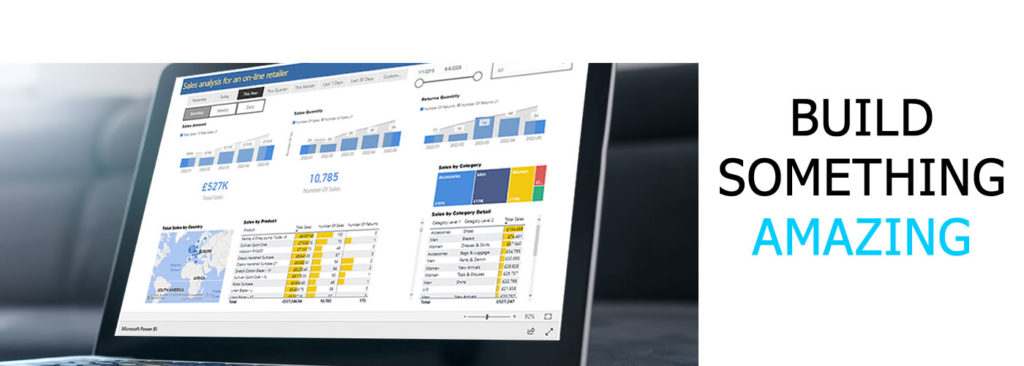
Other roles include presenting, providing training, and passing on SQL Server / Power BI and DAX skills to other team members.
Our Data Warehousing Experience
For ETL/ ELT, we have written many, many SSIS and SQL scripts, including advanced data transformations, database change tracking, slowly changing dimensions (SCDs) custom scripts in VB and C#, connecting to disparate OLEDB and ODBC data sources, error tracking and deployment.
What are the Challenges when designing and implementing a Data Warehouse?
Designing a data warehouse requires a solid understanding of the organization’s data requirements, as well as the data sources that are available. The following are the key considerations in designing a data warehouse:
Data Sources
Determine the types of data sources that need to be included in the data warehouse, including transactional systems, legacy systems, and cloud-based systems. The data sources need to be integrated into the data warehouse to ensure that the data is consistent, accurate, and up-to-date.
Data Modeling
Define the data structure for the data warehouse, including the relationships between tables, data elements, and attributes. The data model should also take into account the organization’s data requirements, including the types of reports and analysis that will be performed.
ETL (Extract, Transform, Load) or ELT (Extract, Load, Transform)
Develop an ETL or ELT process to extract data from the sources, transform the data into a format that is suitable for the data warehouse, and load the data into the data warehouse. This process should be automated and regularly scheduled to ensure that the data in the data warehouse is up-to-date.
Data Quality
Ensure the data quality of the data in the data warehouse by implementing data validation and data cleansing rules. This helps to ensure that the data is accurate and consistent, and minimizes the risk of incorrect data being used for analysis and reporting.
Performance
Ensure that the data warehouse is optimized for performance, including the indexing of data, the use of summary tables, and the use of materialized views. This helps to ensure that the data can be retrieved quickly and efficiently for analysis and reporting.
Security
Implement security measures to ensure that the data in the data warehouse is protected from unauthorized access, modification, and deletion. This includes access controls, data encryption, and audit trails.
Scalability
Ensure that the data warehouse can scale to accommodate growing data volumes and increased demand for analysis and reporting. This includes the use of distributed systems, data partitioning, and load balancing.
Maintenance
Develop a maintenance plan for the data warehouse, including regular backups, data archiving, and disaster recovery planning. This helps to ensure that the data warehouse is available and reliable for analysis and reporting.